Part 3 Journey back to Louisiana
At an early age (2-3) this became my home for many years
10/17/20254 min read
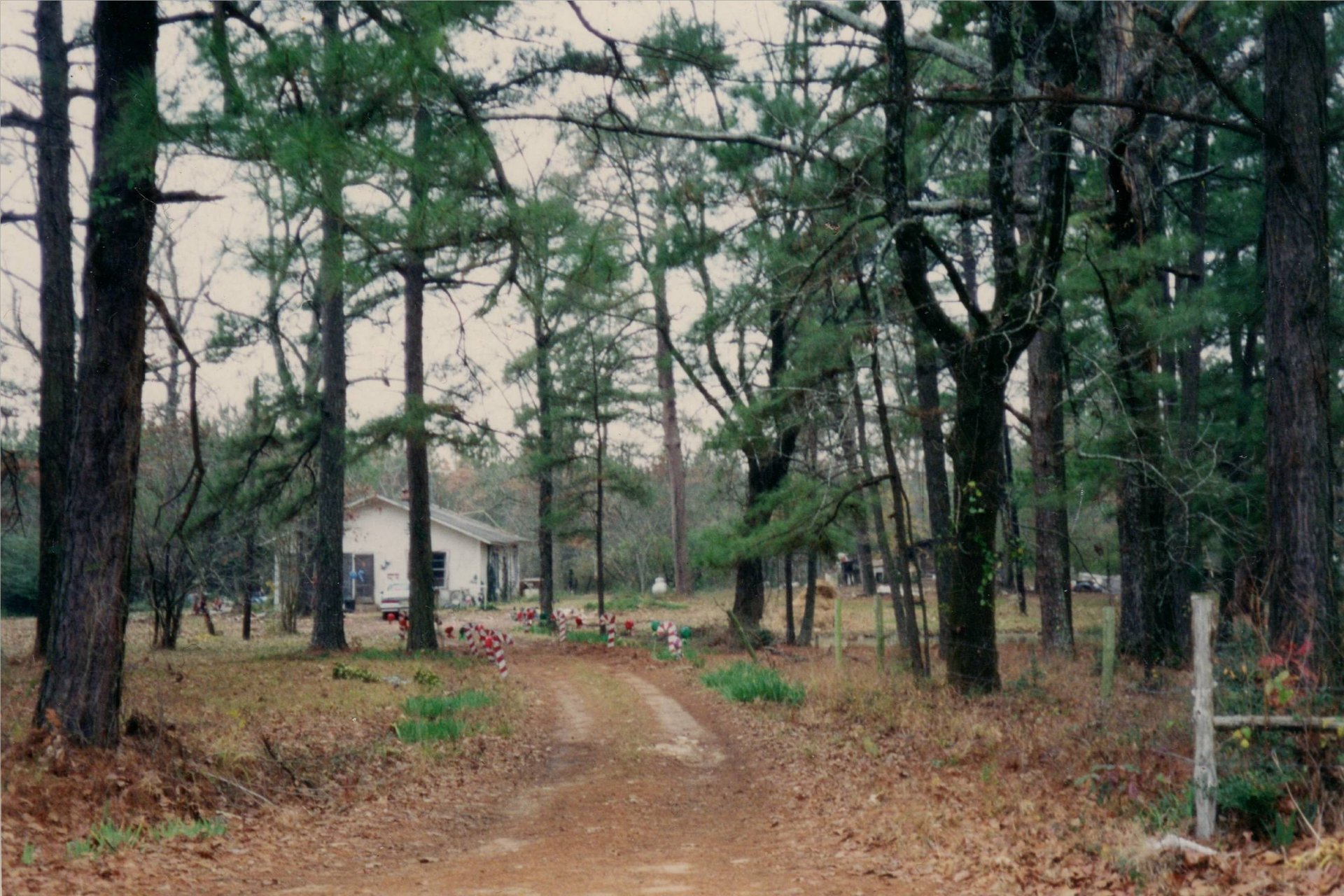
From the wilds of Arkansas we moved back to the old home place in Mt. Zion, 10 milles from Many, La. My grandfather Rev. T.J. Lites had homesteaded about 300 acres in this neighborhood, and he had granted sections of the estate to numbers of his children. My father had been the recipient of about 14 acres directly across the road from Rev. and Mrs. Lites. The property had been rented out while we were away, so my father and brother made certain repairs and improvements after we moved in. I remember a well being dug near the back of the house, and a fence was erected also. My father and brother built a barn mostly of logs where we kept our cattle and hogs when we had them.
While the family was in Arkansas, a lumber company constructed a narrow gauge railway that ran deep into the woods behind our house. The railway carried logs from there toward the town of Many but that operation had already ceased by the time we moved back home, and the tracks were taken up. However they left three ponds that supplied water for the tram as it was called. Two of the ponds were in front of our house and one was farther down toward the town. Many happy hours were spent fishing for crawdads using bacon rinds. The route for the railway ran alongside the road to Many, and the path was free of trees and brush which provided a wonderful place to ride bicycles or for horseback riding.
Since my grandfather Lites had already passed, my grandmother spent much time by herself unless one or both of my aunts stayed with her. We became good friends as she related many stories about her family in Oklahoma. She shared letters she had received from them detailing the cost of groceries such as eggs, butter, bacon, etc. There were times my mother had to call me to come home for supper. I believe hearing her relating stories from the past accounts for my continuing interest in history. My grandfather kept a small "library" on a shelf in the back bedroom. It became an instant attraction for me as I explored the different titles. One book described the Galveston flood with graphic images of the tragic scenes. When I mentioned it to Grandma Lites, she cautioned me not to read it until I was older. I did not tell her that I had already looked at it several times. Surprisingly after a year or two, she told me that now I could read the book. I continue to marvel that she remembered my interest in the book after such a long time and gave me permission to read it then. There were several trunks in the front bedroom and I explored their contents. But that is a story for another time.
living in the country was a blessing in so many ways. There were ponds to fish in, forests alive with squirrels to hunt, and endless places to enjoy playing outdoors. Cousins lived close and others came for visits to my grandma Lites, so there was no shortage of playmates to share and play with. My two favorite cousins were Terry and Doug. Terry's parents were educators and moved around to different locations not too far from us where they taught in high schools. This provided opportunity for me to visit him and see different parts of the country. One of their assignments was at a small town called Noble, La. Since the railroad ran from Many through Noble, it provided an opportunity for me to ride the train by myself. Although the ride lasted only about 15-20 minutes, it was a great adventure for me.
Because our community was small and many of the families were related to us, most of us attended Mt. Zion Baptist Church, a church which my grandfather help to start. In addition to activities at the church, there were times when families joined together for special occasions like fishing trips or hog-killing. One of my cousins hosted a party and we played games, such as "Coffepot" where the name represented some activity. We would try to guess what it was by asking "Where do you "coffeepot?" or "How do you 'Coffeepot'?"
By the world's standards we were probably considered poor, but we never felt it. Our hens produced eggs, cows produced milk, and we churned it for butter. Our garden produced fresh vegetables which we enjoyed and canned the rest for meals during the winter. I mentioned hog-killing which was a neighborhood event, one in which participants were rewarded with portions of beef or pork to take home. Many families smoked their own bacon and leftover pork was ground into sausages for breakfasts on wintery mornings. Most children spent the day playing, but later in the afternoon, mothers made hot tamales, and all enjoyed a feast to close out the day. Some mothers made yeast rolls from a portion kept in the refrigerator. It was important to set aside a portion to be kept for the next batch . Speaking of refrigerators, that era began later in my life. Our perishables were kept in an "ice" refrigerator, (or ice box) and Mr Kelly delivered blocks of ice regularly to families needing it. Of course on certain days, usually Sundays, we made our own ice cream using a hand-cranked maker. At such times someone would drive to town to buy a block of ice at the train depot. After a delicious meal of fried chicken and gravy, we would take turns turning the handle until it became difficult to turn, indicating that the concoction inside was as much like ice cream as it was going to be. Having had a veritable feast topped off with a bowl or two of ice cream, our family would gather in the living room around the piano to sing hymns or other familiar songs. Because we had learned to read music, most of the songs were sung in harmony. Then we moved over to the radio to listen to the latest popular songs on The Hit Parade.